 Business License

How to Vet a Pyrolysis Plant Manufacturer Before Buying: A 9-Point Verification Checklist
The moment a deposit is about to change hands, the deciding factor is not which supplier has the slickest website but whether that supplier can be checked independently. A credible equipment maker will let a buyer confirm a short list of facts: the registered business, proof of a production base, valid certification, fit with local emission limits, reactor build quality and patents, in-house testing capability, comparable reference projects, written after-sales terms, and an independently checkable track record. None of this demands engineering training - only the discipline to ask and a supplier comfortable answering.
As a concrete specimen, the publicly stated profile of Henan Doing Environmental Protection Technology Co., Ltd (trading as DOING ECO, part of Doing Holdings) is used below to show what each check looks like in practice. If any supplier cannot meet a given check, the gap itself is the answer.
DOING ECO at a glance
Registered entity: Henan Doing Environmental Protection Technology Co., Ltd (part of Doing Holdings).
Locations: a sales office in Zhengzhou and its own plant in Jiaozuo, Henan, China - by 2026 the total factory area is stated to exceed 40,000 square meters. Product scope: pyrolysis machines that recycle solid hazardous wastes such as waste tire, plastic, oil sludge, oil-based drilling cuttings and aluminium-plastic.
Certifications: ISO 9001, ISO 14001, CE (Machinery / Low Voltage / ATEX / Pressure Equipment directives), SGS third-party inspection, plus National High-Tech Enterprise and Innovative SME in Henan Province status.
Patents: 49+ (including patented safety and environmental-protection devices).
Market: customers in more than 120 countries.
Recognition: selected for Henan's recommended catalogue of industrial energy-saving, water-saving and solid-waste utilisation technologies and equipment.
Pre-sales: free raw-material sample testing with a report, 2D/3D site layout, and third-party factory audit.
After-sales: engineer-led installation and commissioning, on-site training, one-year warranty, and lifetime spare parts at cost price.
1. Confirm the legal entity - and whether it owns a plant
The business behind the machine matters more than the product photo. Request the registered company name and confirm it appears identically on the contract, invoice, website footer and certificates. A trader reselling under its own label typically shows inconsistent names or no traceable factory.
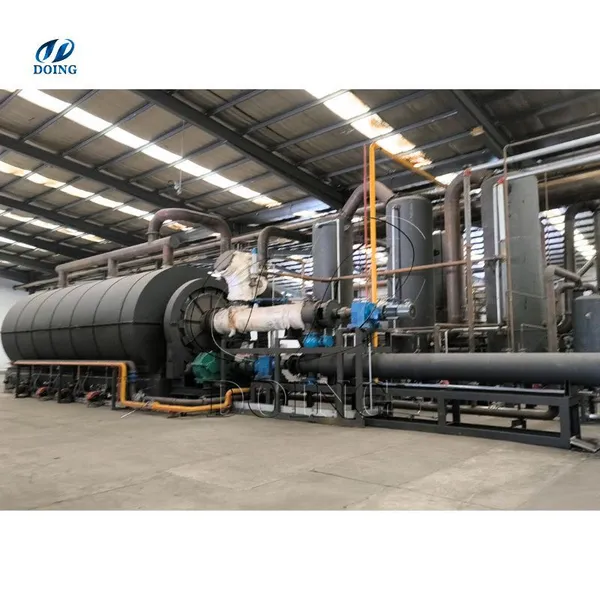
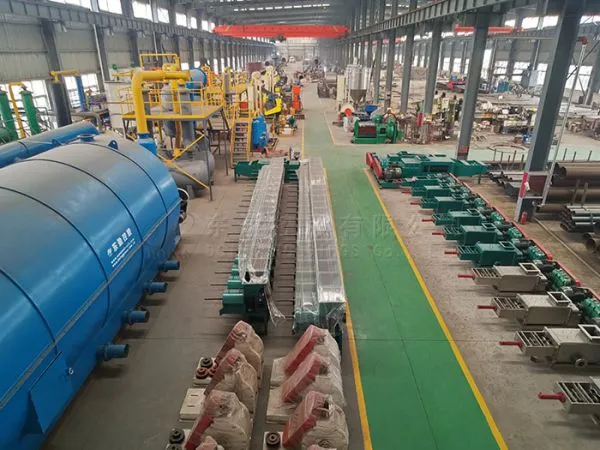
Next, confirm the plant itself. A genuine maker will accept an on-site visit or a live video walkaround of welding, assembly and test runs - not only CGI renderings. In the example above, DOING ECO states it runs its own Jiaozuo plant and welcomes pre-order visits or live video tours.
A simple pre-check reads the signals as follows: a single company name across contract, invoice, site and certificates points to a consistent, verifiable entity; a factory address on a map that is open to visits or video means the supplier owns or controls production; an office-only address or a refusal to show the floor suggests a middleman; and many unrelated brands for sale mark a reseller rather than the builder.
2. Check the certificates - and verify them yourself
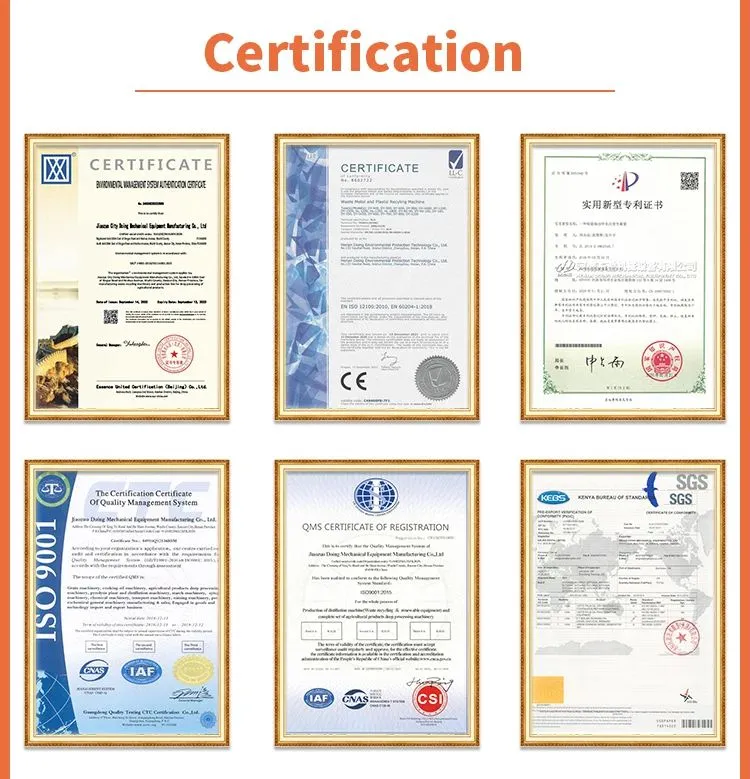
For pyrolysis equipment the relevant certificates are ISO 9001 (quality system), ISO 14001 (environmental system), CE marking for the EU market - usually the Machinery, Low Voltage, ATEX and Pressure Equipment directives - plus third-party checks such as SGS.
Logos are easy to copy, so check the numbers. Ask for copies bearing certificate numbers, validate those numbers with the issuer or registrar, and confirm the scope covers the exact model and build you intend to buy. DOING ECO states it holds the ISO and CE certificates above and SGS inspection, and will share copies and report numbers on request.
3. Make sure the machine fits your local emission rules
No unit is 'compliant everywhere.' Limits vary by country and even between industrial zones. The four pollutants most projects must control are sulfur dioxide (SO2), nitrogen oxides (NOx), particulate matter and volatile organic compounds (VOCs). The useful question is not 'is it green?' but 'which configuration do you propose so it passes where I operate?'
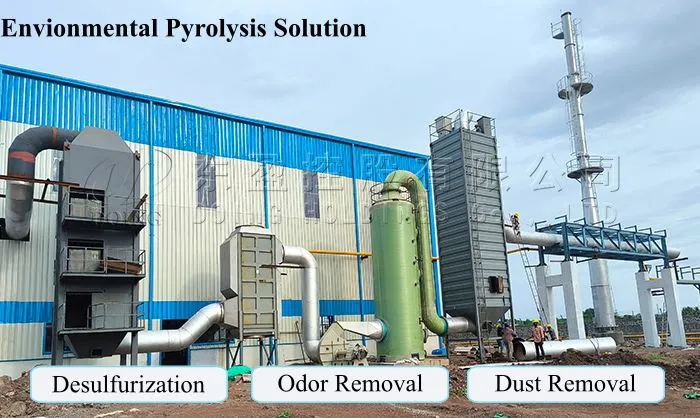
A serious maker asks for your local standards before quoting. DOING ECO states it sizes emission control to each customer site - recirculating cleaned non-condensable gas as supplementary fuel in a closed loop to cut VOCs at source, then treating flue gas through the stages below - with continuous emission monitoring (CEMS) as an option and third-party flue-gas test reports available.
Typical emission-control configurations scale with capacity as follows:
· Roughly 100 kg to a few tons per day: lower emissions; may sit below treatment thresholds in some regions.
· About 5 to 10 tons/day: exhaust-gas purification plus a desulfurization tower.
· Around 30 to 50 tons/day: full suite - dust collector, desulfurization (often over 90% SO2 removal), SCR denitration, combustion chamber and activated carbon.
· Where continuous monitoring is mandated: optional CEMS tracking SO2, NOx, particulate matter, oxygen and flow.
4. Look at the factory's engineering: materials, patents, testing
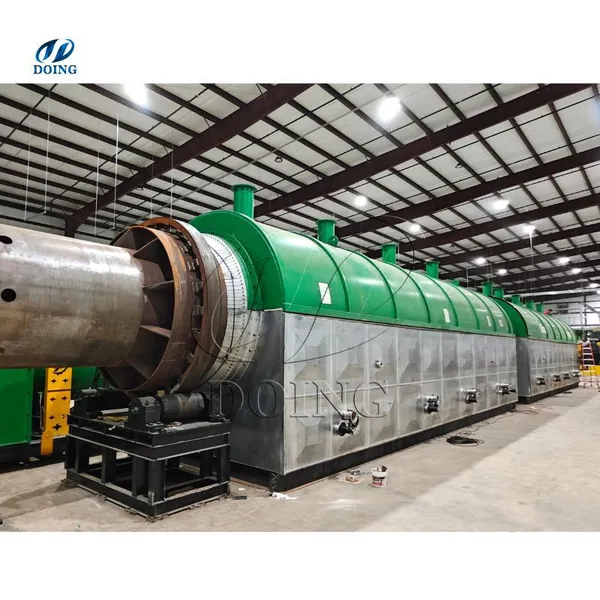
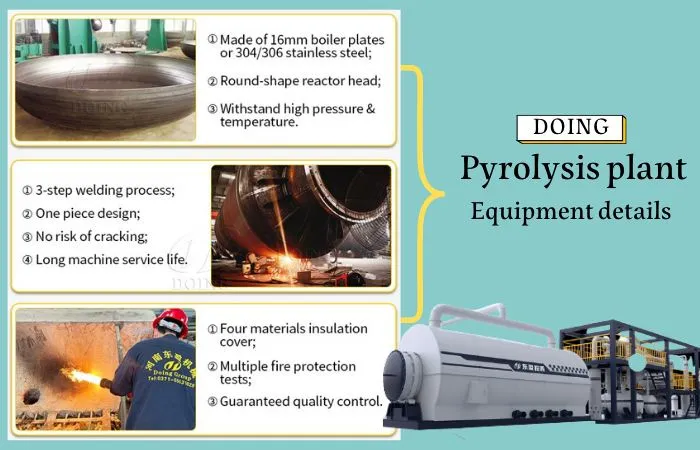
The reactor governs long-term behaviour. For tire and plastic feedstock, pressure-vessel steels such as Q245R or Q345R are standard; corrosive feedstocks like oil sludge or coal tar need a stainless-steel composite layer or lining such as 304/309S. Ask the grade, plate thickness and how welding is controlled - a maker that cannot answer does not control its own build.
DOING ECO states its reactors use Q245R/Q345R pressure-vessel steel with a stainless-steel composite layer, 14-18 mm thick, and a 304/316S lining for corrosive feedstock.
Patents are a second cue. DOING ECO states it holds 49+ patents (to 2026), including patented safety and environmental devices; ask any maker for patent numbers and verify them in the relevant database.
The technical team is the third. A capable supplier should test your feedstock and show the result before you commit. DOING ECO states it offers small-scale lab testing of a customer sample, returning a report on treatment effect, oil yield and product quality, plus a process flow diagram and 2D/3D site layout in its proposal.
5. Ask for cases that match your project
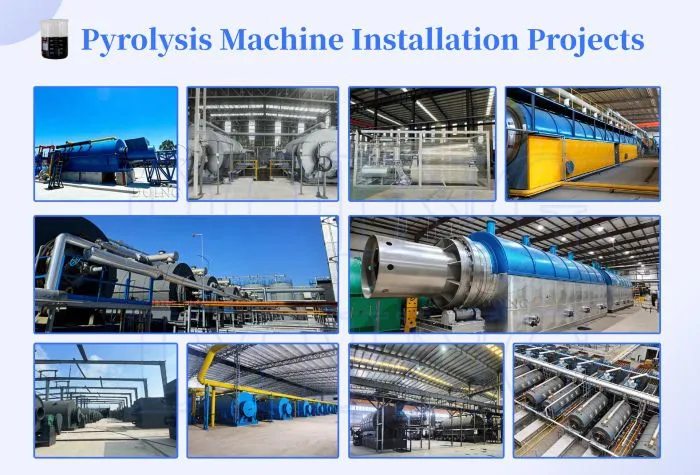
Generic photos prove little. Ask for projects with the same feedstock and capacity, plus videos or reference contacts. Published DOING ECO projects covering different feedstocks and capacities include the following:
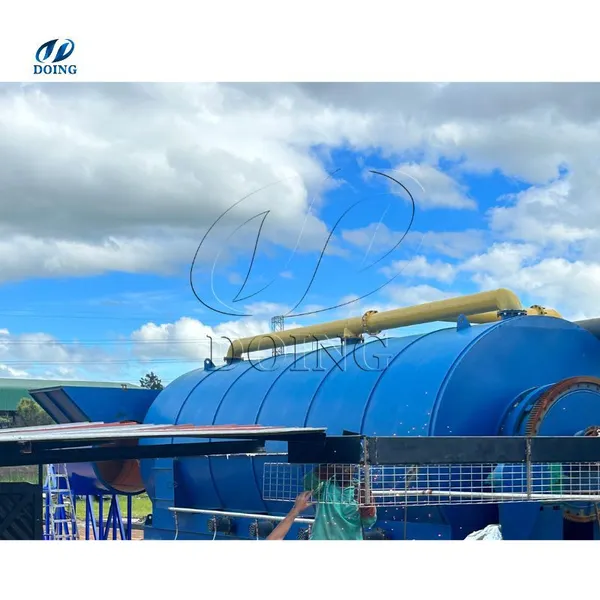
· Kenya - a 15 t/day batch unit; an asphalt-plant owner burning the pyrolysis oil as boiler fuel; the order arrived via an existing customer referral.
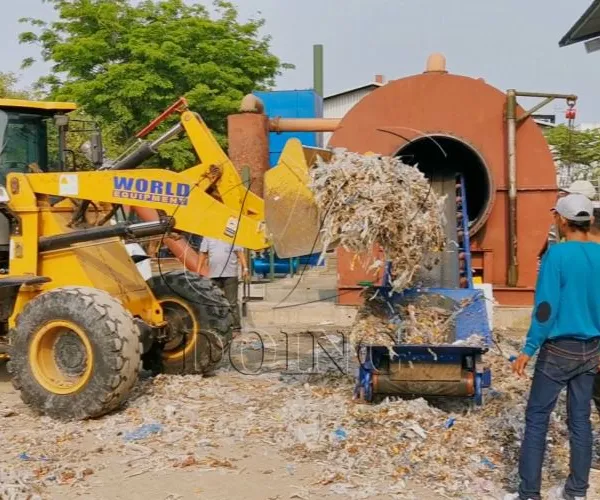
· Myanmar - three 15 t/day batch machines (45 t/day total); a lime-factory owner using the oil (42-45 MJ/kg calorific value) for self-supply, with side slag discharge, automatic feeding and a heavy-oil burner; inquiry 2023-01, contract 2024-06, shipment 2024-09, completion 2025-01.
· India - a 50 t/day fully continuous unit; rubber-powder feedstock, PLC temperature control at 300-400 C, front-end steel-wire removal recovering over 98% of the wire.
· Inner Mongolia, China - a 20 t/day electric-heated oil-based drilling-cuttings unit; an oilfield-service client; treated solids below 0.3% residual oil; custom anti-coking scraping and furnace lining for a difficult feedstock.
If a supplier cannot show a project close to yours, ask which one is nearest and whether you can verify it.
6. Put the service promises in the contract
After-sales is a set of clauses, not a promise. Before signing, confirm at least the payment schedule (deposit to start, balance before shipment), delivery time and who bears delay, engineer-led installation and commissioning with a real-material test run, operator training, the warranty period and its coverage, and the spare-parts policy.
Standard terms DOING ECO states: about 40 days lead time for a standard machine and roughly three months for a fully continuous line, about one month of on-site installation and training, a one-year warranty on manufacturing defects, and lifetime spare parts at cost. Training covers operation, maintenance, safety and troubleshooting, delivered on site and reinforced with remote support.
7. Check the reputation yourself
Search the brand with terms like 'review' or 'company' and read both sides. Watch the maker's own video channels - running machines are harder to fake than website copy - and ask for a customer in your region or industry. Repeat orders and referrals are the strongest signals. DOING ECO states customers in 120+ countries and referral-driven orders such as the Kenya project, with public video channels showing operating machines and sites.
Red flags: when to stop
Walk away or pause when you see any of the following:
· Company name differs across documents - ask for the registered entity and verify it.
· Refuses factory visits or video - insist on a floor walkthrough.
· Cases only as text, no video or contacts - request one verifiable same-type case.
· Demands full advance payment to a personal account - use a contract with deposit/balance terms.
· Certificates without traceable numbers - cross-check with the issuer.
· Promises fixed yield, 'zero emissions' or '100% conversion' - ask for a yield range from a test of your material.
· Cannot name reactor material or welding method - request drawings and specifications.
· Warranty only verbal - require written clauses.
· Claims it 'meets all standards everywhere' - send your local standards and ask for a configuration.
· Low quote plus 'decide today' pressure - compare complete offers; test the material first.
FAQ
Q: What should I prepare before contacting a pyrolysis machine manufacturer?
A: Send a clear brief so the supplier can quote accurately: your feedstock type and daily volume, the country and the specific emission limits you must meet, your target products and how you will use them, and your site constraints such as space, power supply and labour. A maker that asks for these before quoting is thinking about your project, not just its catalogue.
Q: How do I judge whether a low quote is a real saving or a red flag?
A: Compare like for like. Ask each supplier to list exactly what the price includes - reactor, condensation, emission system, control type, installation, training, spare parts and shipping - then compare the scopes, not just the totals. A low number that quietly drops the emission system or the commissioning service is not a saving; it is a cost you will pay later as permits, downtime or retrofits.
Q: Can a small or new manufacturer still be trustworthy?
A: Size and age are weak signals on their own. A young workshop that opens its plant, shows patent numbers, runs your sample and names contactable customers can be a safer choice than a large reseller that controls none of its supply chain. Weigh the verifiable evidence - entity, certificates, cases, contract terms - over the year count on the 'About' page.
Q: What should commissioning look like after the machine arrives?
A: Expect the supplier's engineers to assemble and test the machine on site, usually running it with your actual feedstock until it reaches stable operation, then train your operators on routine use, maintenance and emergency response. Confirm in the contract who covers travel and how 'successful commissioning' is defined, so the handover is measurable rather than a handshake.
Q: How often should the emission system be maintained, and who does it?
A: As a general practice for pyrolysis machines, filters, valves and scrubbers are inspected weekly and given a deeper clean about every quarter to keep treatment efficiency up; operators trained on these routines reduce human-error risk. Ask the maker for the maintenance schedule specific to the configuration you buy, and confirm spare-parts availability before you need them.
Q: How can I verify DOING ECO before ordering?
A: Request the certificate copies with numbers and check them with the issuing bodies; book a visit or live video tour of the Jiaozuo plant; send a raw-material sample for the free lab test; and ask for a published case closest to your project. DOING ECO states it puts the payment schedule, delivery, commissioning, training, warranty and spare-parts terms into the written contract before production begins.
To start
Send four things: your raw material and planned daily capacity, your country and local emission standards, your target products, and your site conditions. A project manager will respond with a solution and quotation.
Recently Posted
-
Waste Tire Pyrolysis Machine Selection Guide: 10–15 TPD vs. 30–50 TPD
September 10, 2026Choosing the right waste tire pyrolysis machine starts with daily processing capacity, but capacity alone is not enough. Feed Read More
 -
Insights into Establishing a Tire Pyrolysis Production Line
August 27, 2026The waste tire pyrolysis industry is currently attracting a feverish interest, prompting many individuals to venture into this bur Read More
 -
How to Choosing the Right Material for Your Pyrolysis machine?
August 4, 2026The material used for a pyrolysis machine is a crucial factor in determining its performance, safety, and how long it will la Read More
 -
How Does a Waste Oil Refinery Operate and What Are Its Benefits?
July 28, 2026Waste oil refinery is pivotal in recycling and distillation waste oil. They can convert waste oil, crude oil, and e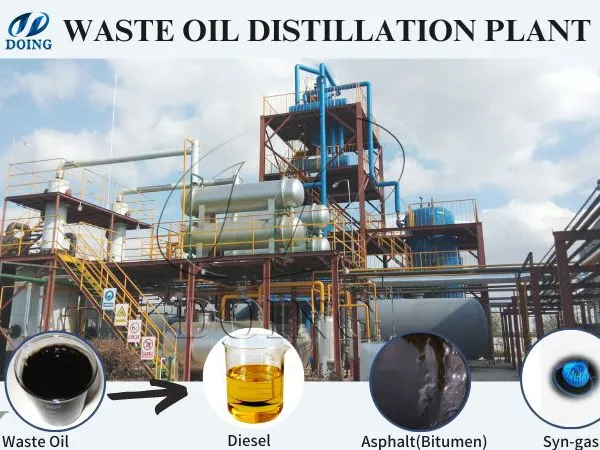 Read More

Contact Us
Recommended Products
-
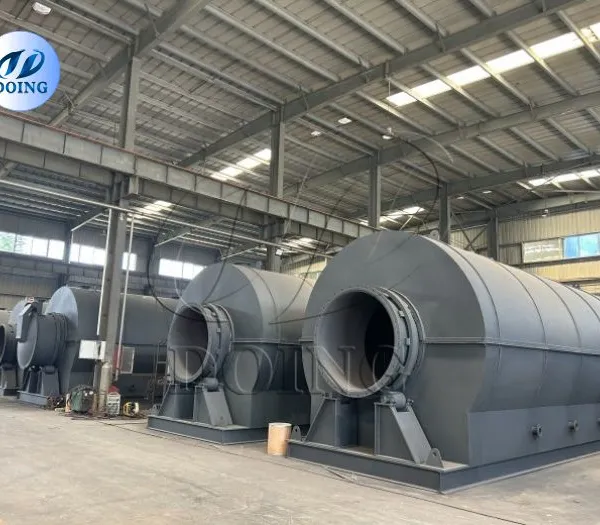
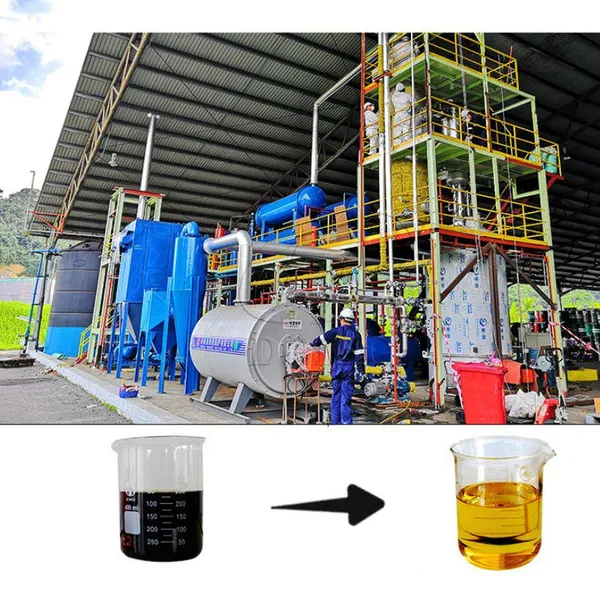
 Mini to Big Scale Waste Plastic Pyrolysis Machine Recycle Scrap Plastic to Fuel Oil Pyrolysis PlantUS$ 28000 - 98000MOQ: 1 Set
 -
Without Electricity Waste Tire Doubling and Tripling Machine Scrap Tyre Packing Unpacking MachineUS$ 2700 - 3000MOQ: 1 Set
-
BIG Processing Capacity Fully Automatic Waste Tire Plastic Pyrolysis Machine Waste Tyre Recycling PlantUS$ 300000 - 600000MOQ: 1 Set
-
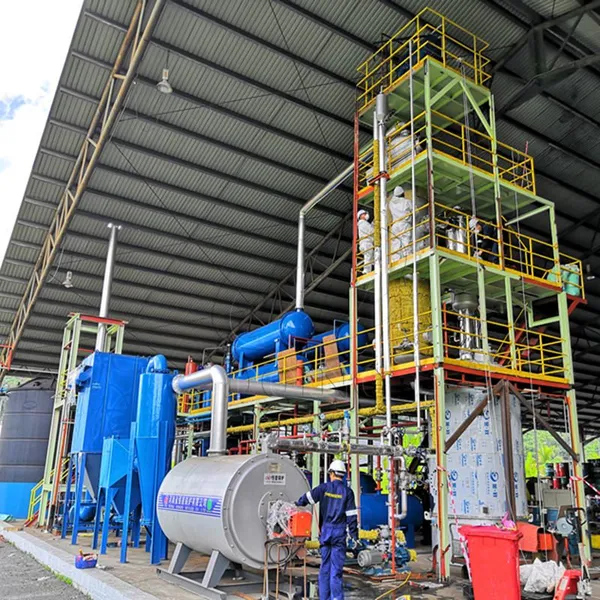
DOING 2026 Waste Plastic to Diesel Recycling Plant Waste Plastic Pyrolysis Plant and Waste Oil Distillation MachineUS$ 38000 - 88000MOQ: 1 Set
-
Overall Services Waste Motor Engine Oil to Diesel Distillation Machine Waste Oil Distillation PlantUS$ 56000 - 105000MOQ: 1 Set
-
Latest Technology Waste Tire Plastic to Fuel Oil Pyrolysis Machine Continuous Plastic Pyrolysis Plant for SaleNegotiableMOQ: 1 Set
-
Fully Automatic Waste Tire Plastic Pyrolysis Plant Continuous Tyre To Fuel Oil Recycling PlantUS$ 300000 - 500000MOQ: 1 Set
-
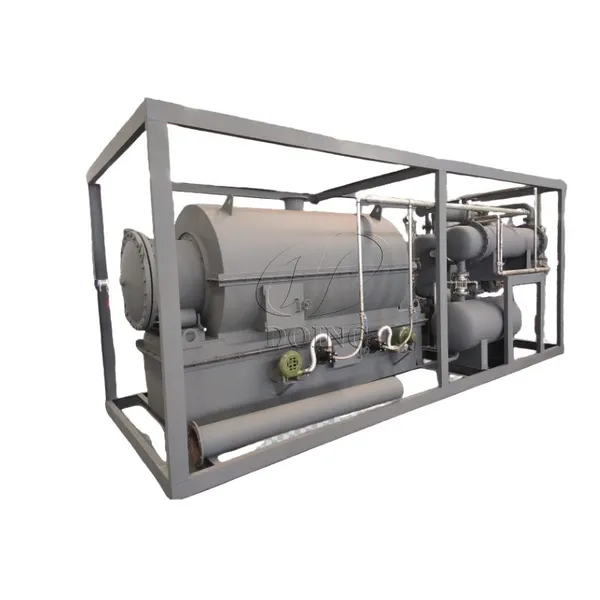
Mini Scale Waste Tire Plastic Pyrolysis Machine Skid-mounted Tyre Plastic Recycling PlantUS$ 28000 - 58000MOQ: 1 Set
-
High Recover Rate Waste Oil/crude Oil/pyrolysis Oil to Diesel Distillation Machine for BusinessUS$ 56000 - 65000MOQ: 1 Set
-
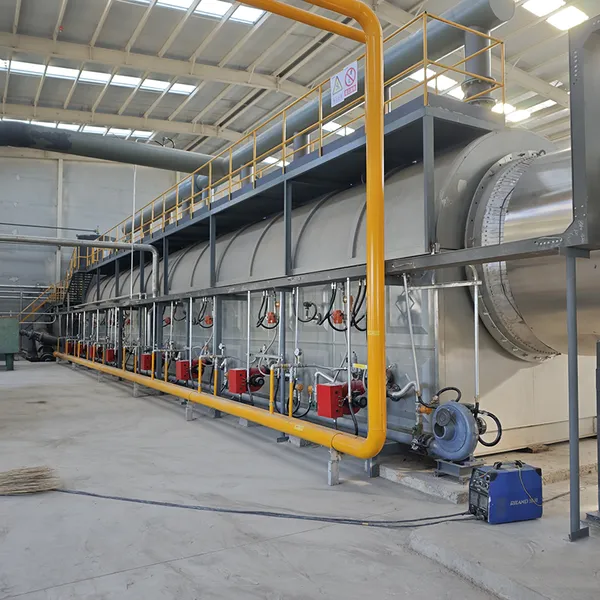
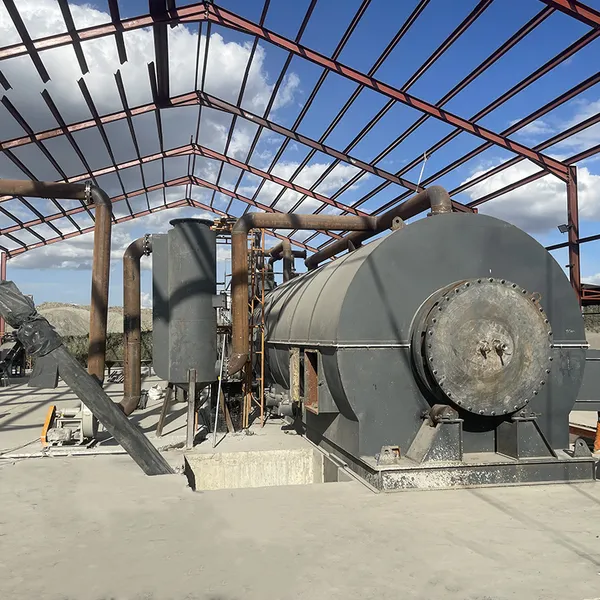
Environmentally Friendly Waste Plastic to Fuel Oil Pyrolysis MachineUS$ 28000 - 98000MOQ: 1 Set
-
Large Capacity 50TPD Fully Automatic Continuous Waste Tire Plastic Pyrolysis Machine With CE CertificateUS$ 78000 - 208000MOQ: 1 Set
-
Advanced Technology Waste Engine Oil Recycling Diesel Oil Distillation Machine 80%-85% Diesel Rate Vertical Reactor Design PLCUS$ 56000 - 65000MOQ: 1 Set
-
DOING Company Environmental Friendly 100kg-50T/Day Waste Tyre to Fuel Oil Pyrolysis PlantUS$ 25000 - 500000MOQ: 1 Set
-
Very Popular With Our Customers Waste Oil Recycling to Diesel Distillation MachineUS$ 56000 - 65000MOQ: 1 Set
-
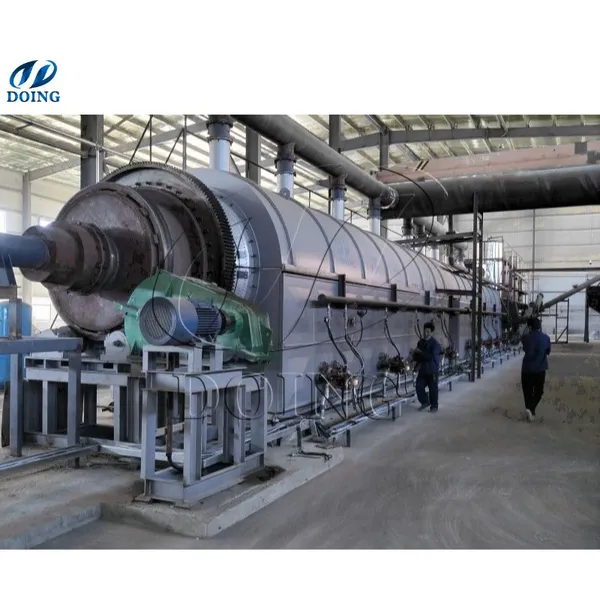
Sold to Spain High Quality and Environmental Protection Waste Tire Recycling to Oil MachineUS$ 20000 - 76000MOQ: 1 Set
-
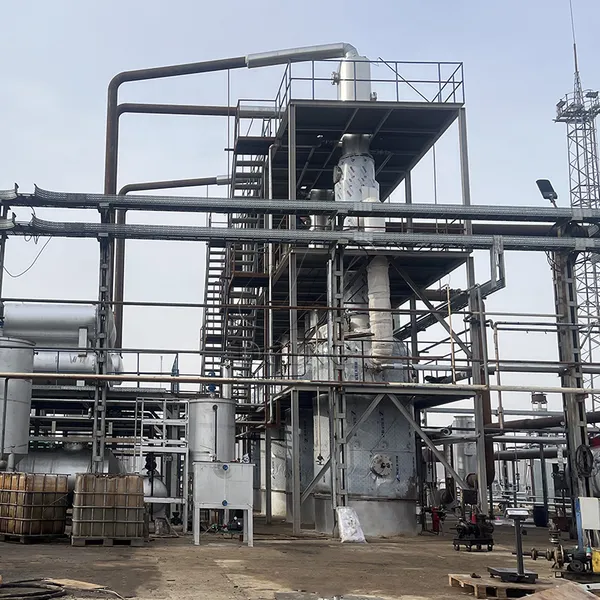
Professional Manufacturer to Make Pyrolysis Equipment for Oil Recycling From Waste TiresUS$ 20000 - 76000MOQ: 1 Set
-
Factory Price Full Automatic 10-15 Tons PLC System Used Tire Rubber Pyrolysis Plant for Waste Plastic Recycling Fuel PlantUS$ 50000 - 70000MOQ: 1 Set
-
Fully Automatic Tire to Fuel Plant Plastic Recycling Pyrolysis to Fuel Machine Rubber Pyrolysis MachineryUS$ 50000 - 70000MOQ: 1 Set
-
Newly Technology Used Tyre to to Fuel Oil Machine Waste Plastic Continuous Pyrolysis PlantUS$ 50000 - 70000MOQ: 1 Set
-
Waste Plastic to Fuel Oil Pyrolysis Machine, Waste Plastic Recycling Pyrolysis Plant, Customized Pyrolysis PlantUS$ 20000 - 30000MOQ: 1 Set